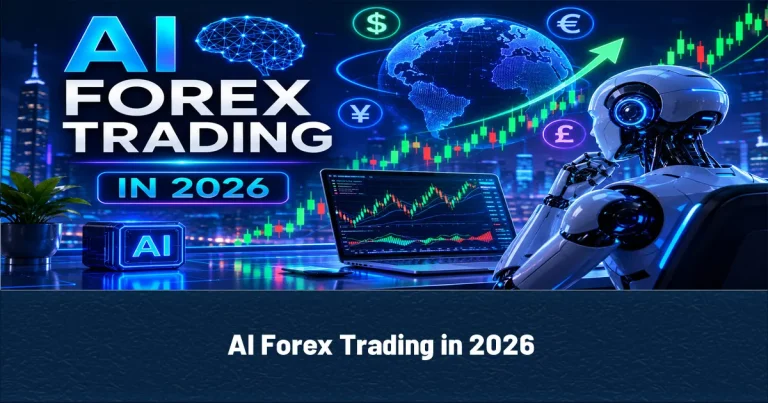
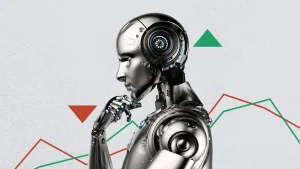
AI forex trading refers to the use of machine learning models, algorithmic automation, and data-driven signal generation to analyze currency markets and execute trades. In 2026, three developments have made this technology meaningfully more accessible to retail traders.
First, processing power and cloud computing costs have dropped dramatically — meaning that tools which once required institutional infrastructure now run on a standard laptop or browser tab. Second, no-code platforms have eliminated the need to write a single line of Python or MQL to automate a strategy. Third, large language models have entered the trading stack, enabling natural-language market summaries, earnings analysis, and even plain-English strategy builders that translate a rule like “buy EUR/USD when RSI crosses 30 and the 50 EMA is rising” directly into executable logic.
The result: AI forex trading in 2026 is a layered discipline. At the entry level, it means using a scanner to flag setups automatically. At the advanced level, it means running a fully algorithmic system that back tests across a decade of tick data, optimizes parameters, and executes live trades without manual input.
Read More: Best Prop Trading Firms in 2026; The complete guide for funded traders
The 4 Core Uses of AI in Forex Trading
Understanding what AI actually does in a trading context prevents the common mistake of treating it as a magic signal generator. There are four primary functions where AI adds genuine, measurable value.
Pattern Recognition and Signal Generation
AI models, particularly deep learning systems trained on historical price data, can identify chart patterns, momentum divergences, and volatility regimes faster and more consistently than manual analysis. Tools like LuxAlgo and TrendSpider use these models to overlay real-time signals on live charts without requiring a trader to build the underlying algorithm.
Automated Execution
Once a strategy is defined, AI removes the most dangerous element of trading: human emotion during live execution. Platforms like Capitalise.ai allow traders to define rules in plain English and execute them automatically via a connected broker. MetaTrader 5’s Expert Advisor ecosystem serves the same purpose for traders comfortable with MQL code or pre-built bots.
Backtesting and Strategy Validation
No strategy should go live without historical testing. AI-powered backtesting tools — QuantConnect being the most comprehensive free option — run a strategy against years of historical data in seconds, surfacing performance metrics, drawdown profiles, and win rates across different market conditions. This step alone separates professional-grade development from guesswork.
Sentiment Analysis and News Filtering
Currency pairs respond sharply to macroeconomic events: central bank decisions, inflation data, employment reports. AI-powered news filters — including tools integrated into TradingView and IC Markets’ broker dashboard — parse and rank news in real time, flagging high-impact events before they hit the charts. This allows traders to either avoid high-volatility windows or position specifically for them.
Read More: Forex Demo Account: Everything Beginners Should Know
Best AI Forex Trading Tools in 2026: Quick Comparison
| Tool | Pricing | Skill Level | Best For |
| TradingView | Free–$60/monthly | All levels | AI pattern scanner, Pine Script automation, strategy tester |
| MetaTrader 5 | Free | All levels | Expert Advisors, backtesting, 100+ built-in indicators |
| Capitalise.ai | Free–$99/monthly | Intermediate | No-code automation, plain-English strategy builder |
| LuxAlgo | $50–$97/monthly | Intermediate | AI signal overlays, real-time divergence detection |
| QuantConnect | Free–$99/monthly | Advanced | Full algorithmic framework, live broker integration |
Note: Pricing and features are subject to change. Verify directly with each platform before subscribing.
How to Build an AI Forex Trading Stack in 2026
Rather than picking one tool and expecting it to handle everything, the most effective approach in 2026 is a layered stack — each tool doing what it does best.
| No. | Required feature | Description |
| 1 | Charting and signal detection | TradingView with LuxAlgo overlays covers real-time pattern recognition at low cost. |
| 2 | Automation layer | Capitalise.ai (no-code) or MetaTrader 5 with an Expert Advisor handles rule-based execution. |
| 3 | Backtesting and research | QuantConnect or MT5’s built-in strategy tester validates any system before live deployment. |
| 4 | News and macro filter | TradingView’s economic calendar combined with a broker-side news feed (IC Markets, for example, integrates Trading Central and Autochartist) covers event risk. |

What AI Forex Trading Cannot Do in 2026
The honest case for AI in forex trading includes an equally honest list of its limitations. Ignoring these leads to the most common and most expensive mistakes retail traders make with automated tools.
| No. | What AI Forex Trading Cannot Do | Description |
| 1 | AI cannot predict unpredictable events | A sudden central bank rate decision, a geopolitical shock, or a flash crash will break any model trained on historical patterns. AI reduces systematic errors; it does not eliminate market risk. |
| 2 | Backtested performance does not guarantee live results | Overfitting — building a strategy that performs perfectly on historical data but fails on new data — is the most common pitfall in algorithmic trading. Always validate on out-of-sample data before going live. |
| 3 | Automation amplifies both edges and weaknesses | A profitable strategy scales beautifully with automation. A flawed one loses money faster. Test on a demo account for a minimum of 60 trading days before deploying real capital. |
Note: No AI forex trading tool is a passive income machine. Every automated system requires monitoring, periodic recalibration, and risk management oversight. The technology handles execution — not judgment.

Read More: HYCM Review
Final Thoughts; AI Forex Trading in 2026
AI forex trading in 2026 is a genuine competitive advantage for traders who use it correctly — and a fast track to losses for those who treat it as a substitute for strategy and discipline. The tools available this year are powerful, accessible, and increasingly affordable. The traders who benefit most are those who understand what they are automating, validate it rigorously, and monitor it actively. Start with one tool. Test thoroughly. Scale deliberately. The market has always rewarded consistency over cleverness — and AI, used well, is simply a more consistent version of a strategy you already trust.
source: Investopedia