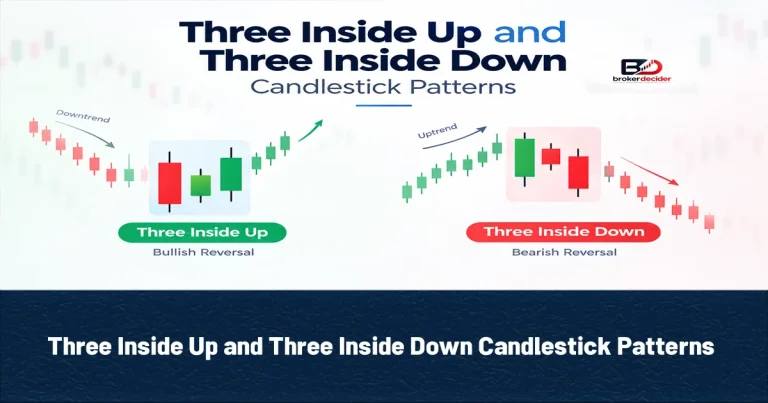
Three Inside Up and Three Inside Down Candlestick Patterns are three candle used in technical analysis to identify a potential change in market direction. The first two Candlestick patterns are based on the Harami candlestick structure, but the third candle provides additional confirmation that the market may be preparing to reverse. These patterns can appear in both forex and other financial markets.
Three Inside Up and Three Inside Down Candlestick Patterns
At first, we will talk about Three Inside Up and how to Identify it. then, It will be Three Inside Down turn.
Three Inside Up
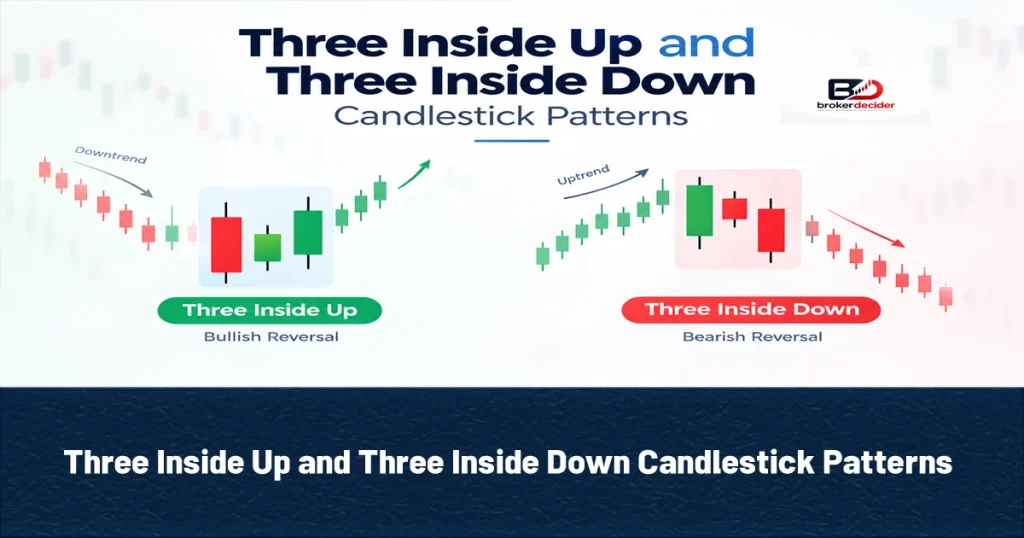
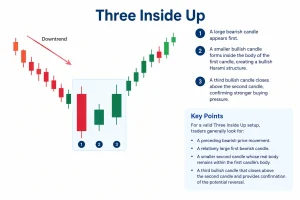
The Three Inside Up Candlestick Pattern is a bullish reversal formation that generally develops after a downtrend. It consists of three candles:
- A large bearish candle appears first.
- A smaller bullish candle forms inside the body of the first candle, creating a bullish Harami structure.
- The third candle is bullish and closes above the second candle, confirming stronger buying pressure.
Identifying Three Inside Up Pattern:
For a valid Three Inside Up setup, traders generally look for:
- A preceding bearish price movement.
- A relatively large first bearish candle.
- A smaller second candle whose real body remains within the first candle’s body.
- A third bullish candle that closes above the second candle and provides confirmation of the potential reversal.
Three Inside Down
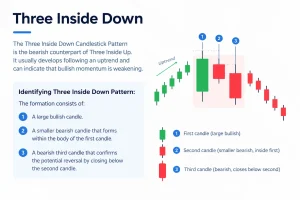
The Three Inside Down Candlestick Pattern is the bearish counterpart of Three Inside Up. It usually develops following an uptrend and can indicate that bullish momentum is weakening.
Identifying Three Inside Down Pattern:
The formation consists of:
- A large bullish candle.
- A smaller bearish candle that forms within the body of the first candle.
- A bearish third candle that confirms the potential reversal by closing below the second candle.
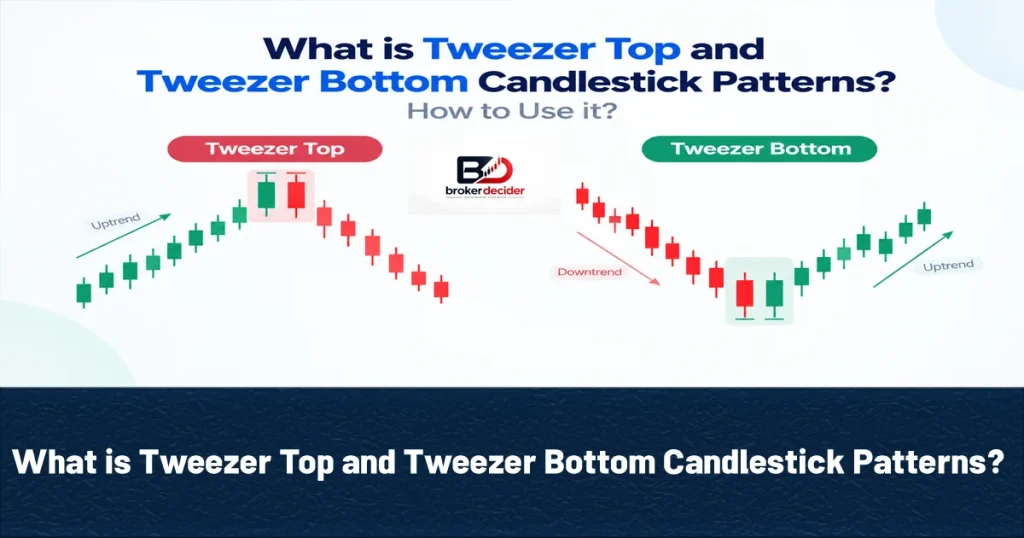
Read More: What is Tweezer Top and Tweezer Bottom Candlestick Patterns? How to Use it?
Three Inside Up and Three Inside Down Comparison Table
In the below table, we will compare Three Inside Up and Three Inside Down Comparison Table with each other:
| Feature | Three Inside Up | Three Inside Down |
| Interpretation | Sellers may be losing control | uyers may be losing control |
| location | After a downtrend | After an uptrend |
| Direction | Bullish reversal | Bearish reversal |
| First candle | Large bearish | Large bullish |
| Second candle | Smaller bullish | Smaller bearish |
| Third candle | Bullish confirmation | Bearish confirmation |
Trading With Three Inside Up and Three Inside Down
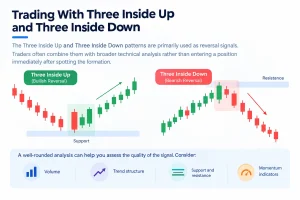
The Three Inside Up and Three Inside Down patterns are primarily used as reversal signals. Traders often combine them with broader technical analysis rather than entering a position immediately after spotting the formation. For example, a bullish Three Inside Up pattern near a well-established support zone may provide a stronger technical setup. Similarly, a Three Inside Down formation near resistance can become more relevant when other indicators also suggest weakening bullish momentum. Volume, trend structure, support and resistance, and momentum indicators can all be used to evaluate the quality of the signal.
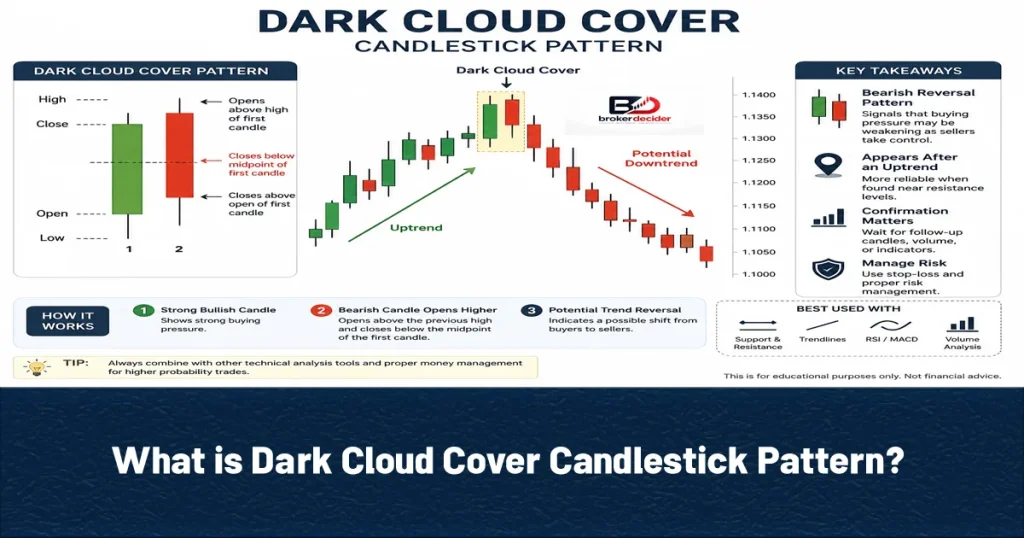
Read More: What is Dark Cloud Cover Candlestick Pattern? How to Use it?
Support and Resistance In Three Inside Up and Three Inside Down
Location can significantly affect how traders interpret these patterns. A Three Inside Up formation occurring around support may indicate that sellers have failed to push the market lower. If the third candle breaks an important short-term resistance level, the setup can provide additional evidence of a potential bullish reversal. For Three Inside Down, the opposite situation applies. A formation near resistance followed by a break below nearby support may strengthen the bearish interpretation. The key point is that the candlestick formation should be considered within the broader price structure.
Three Inside Up and Three Inside Down Limitations
Neither Three Inside Up nor Three Inside Down guarantees that a reversal will occur. False signals can appear, particularly when the market is moving sideways or when volatility is unusually low. Another limitation is that the third candle can confirm the pattern only after part of the potential price movement has already occurred. As a result, traders still need to consider entry price, stop-loss placement and risk-to-reward ratio. Using these patterns alongside other technical factors can help reduce reliance on a single candlestick signal.
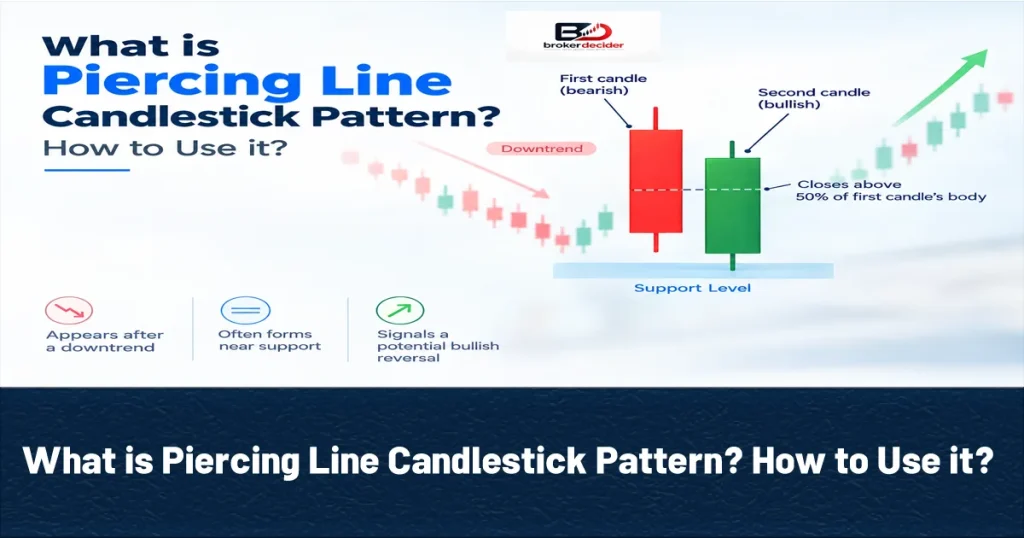
Read More: What is Piercing Line Candlestick Pattern? How to Use it?
Final Thoughts About Three Inside Up and Three Inside Down Candlestick Patterns
The Three Inside Up and Three Inside Down Candlestick Patterns are three-candle formations designed to identify potential changes in market direction. Three Inside Up is associated with a possible bullish reversal after a decline, while Three Inside Down signals a possible bearish reversal after an advance. Their main advantage is the confirmation provided by the third candle compared with a basic Harami pattern. Nevertheless, the pattern is more useful when evaluated alongside market structure, support and resistance, momentum and overall trend conditions.
Visit Broker Decider Reddit page for more information.
Source: Investopedia