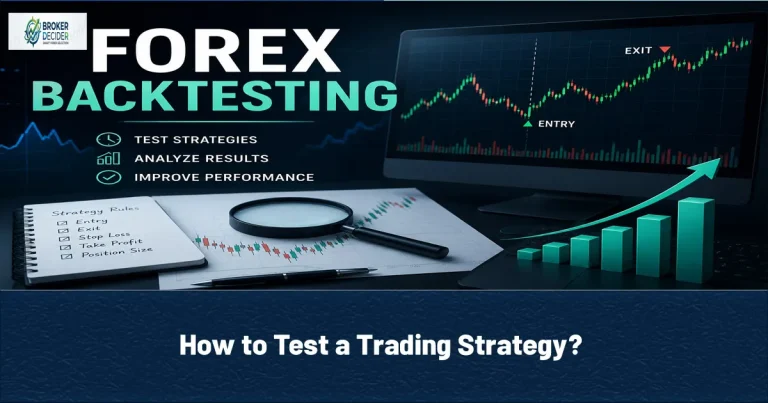
Forex backtesting guide is an essential point for forex traders who want to evaluate their strategies before putting real money at risk. Although many trading methods may seem effective in theory, only a backtesting process can determine whether they deliver a reliable statistical advantage across different market conditions. Regardless of whether you trade manually or rely on automated systems, learning to backtest properly allows you to refine your approach, make more objective trading decisions, and uncover potential flaws before they lead to costly losses.
Read More: Forex Fundamental Analysis
What Is Forex Backtesting?
Backtesting is the process of applying a trading strategy to historical market data to evaluate how it would have performed in the past. The objective is not to predict the future with certainty. Instead, it helps determine whether your trading rules have produced positive results across different market conditions. A proper forex backtesting guide should emphasize that historical performance is only one part of strategy validation. Successful traders combine backtesting with forward testing before risking capital.
Why Backtesting Is Essential?
Many beginner traders skip backtesting because they believe a strategy shared on YouTube or social media is already proven. This approach often leads to inconsistent trading and unnecessary losses. Backtesting provides several important benefits:
- Builds confidence in your trading plan
- Reveals the strengths and weaknesses of a strategy
- Helps estimate realistic drawdowns
- Measures profitability over hundreds of trades
- Removes emotional bias from strategy evaluation
- Improves discipline by encouraging rule-based trading
Read More: USD/JPY Forecast 2026: Outlook, Predictions, Key Drivers, and Trading Opportunities
How to Backtest a Forex Strategy Step by Step
Step 1: Define Clear Trading Rules (Before opening any chart, write down every rule.)
- Entry conditions
- Exit conditions
- Stop-loss placement
- Take-profit targets
- Position sizing
- Trading sessions
- Currency pairs
- Timeframe
Step 2: Choose High-Quality Historical Data (Use several years of historical data covering different market environments)
- Trending markets
- Ranging markets
- High volatility
- Low volatility
- Major economic events
Step 3: Select a Backtesting Method; A complete forex backtesting guide usually recommends one of three approaches:
| No | Backtesting Method | Explanation |
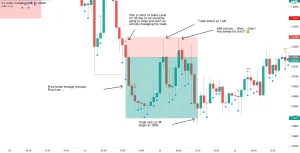
| 1 | Manual Backtesting | You move through historical charts candle by candle while recording every trade. |
| 2 | Automated Backtesting | Trading platforms execute predefined strategy rules automatically. |
| 3 | Hybrid Backtesting | Many experienced traders combine Manual and Automated methods. |
Best Forex Backtesting Software
Several platforms make backtesting easier. Popular options include:
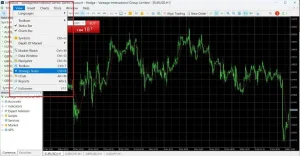
- MetaTrader 4 (In Strategy Tester part)
- MetaTrader 5 (In Strategy Tester part)
- TradingView (In Replay Mode part)
- Forex Tester
- Soft4FX Simulator
- cTrader
Read More: The Best Forex Brokers in Pakistan 2026
Key Performance Metrics You Should Analyze
A forex backtesting guide is incomplete without understanding performance metrics that are:
- Win Rate: The percentage of winning trades (A higher win rate is not always better if average losses are larger than average profits).
- Profit Factor: Profit Factor equals = Total Gross Profit / Total Gross Loss. Generally Below 1.0 = Losing strategy, 1.2–1.5 = Acceptable, Above 1.5 = Strong and Above 2.0 = Excellent.
- Maximum Drawdown: Drawdown measures the largest decline in account equity during testing.
- Number of Trades: Professional traders often evaluate hundreds of trades before drawing conclusions.
Common Backtesting Mistakes
Avoid these common errors:
- Curve Fitting: Adjusting strategy parameters until they perfectly match historical data often creates systems that fail in live markets.
- Ignoring Trading Costs: Always include Spread, Commission, Slippage and Overnight swap. Ignoring these costs can significantly overestimate profitability.
- Look-Ahead Bias: Never use information that would not have been available at the time of the trade. Charts should always be tested one candle at a time.
- Testing Only One Market Condition: A strategy that performs well during strong trends may fail completely during ranging markets.
Read More: What is Forex Scalping Strategy?
Backtesting vs. Forward Testing
Backtesting answers one important question: “Did this strategy work historically?” Forward testing answers another: “Does it still work under current market conditions?” Forward testing involves applying the strategy in a demo account or simulated environment without risking real capital. Most professional traders use both methods before increasing position size.
Final Thoughts about Forex Backtesting Guide
A forex backtesting guide teaches much more than how to test historical charts. It teaches traders to think statistically, follow objective rules, and build confidence through evidence rather than emotion. The most successful traders rarely rely on intuition alone. They develop a strategy, test it across years of historical data, analyze key performance metrics, eliminate weaknesses, and then validate it through forward testing before risking real money.
Source: Investopedia