Forex scalping is one of the short-term trading approaches in the foreign exchange market. Unlike swing traders who hold positions for days or weeks, scalpers aim to capture small price movements within minutes or even seconds. When executed correctly, a forex scalping strategy can generate multiple trading opportunities throughout the day while minimizing overnight risk. In this comprehensive guide, you’ll learn what forex scalping is, how it works, the best scalping strategies, essential indicators, risk management techniques, and the advantages and disadvantages of this trading style.
Read More: GBP/USD Forecast 2026
What Is Forex Scalping?
Forex scalping is a trading strategy that involves opening and closing multiple positions within a short period to profit from small price fluctuations. Scalpers typically Hold trades for a few seconds to several minutes, Execute dozens of trades daily, Focus on highly liquid currency pairs, Use tight stop-loss levels and Target small profits repeatedly. The main objective is not to catch large market moves but to accumulate numerous small gains over time.
Example of a Forex Scalping Trade
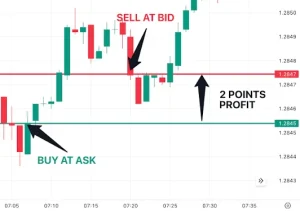
Suppose EUR/USD is trading at 1.1200. A scalper identifies a short-term bullish setup and buys at 1.1200
- Take Profit: 1.1205 (5 pips)
- Stop Loss: 1.1197 (3 pips)
If the price reaches the target, the trader earns 5 pips. Repeating similar setups multiple times during a trading session can potentially generate consistent returns.
Read More: What Is a Pip in Forex? A Beginner’s Guide to Understanding Pips in Trading
How Does Forex Scalping Work?
Scalping relies on short-term market inefficiencies and temporary momentum shifts. Traders use technical analysis, market structure, and indicators to identify quick entry and exit opportunities. The typical scalping process includes:
- Identifying a trend or momentum
- Waiting for a pullback or breakout
- Entering the trade
- Taking profits quickly
- Repeating the process throughout the session
Why Is Forex Scalping Popular?
Many traders prefer scalping because it offers:
- Frequent Trading Opportunities: Major forex pairs can generate numerous setups every day.
- Reduced Overnight Risk: Positions are usually closed before the trading session ends.
- Fast Feedback: Traders quickly learn whether their analysis was correct.
- Consistent Market Engagement: Scalping keeps traders actively involved in market movements.
Read More: What Is Forex Spread? One of the Most Important Trading Costs
Best Currency Pairs for Forex Scalping
Not every currency pair is suitable for scalping. Traders generally prefer pairs with High liquidity, Tight spreads and Strong market participation. Popular scalping pairs include:
| No. | Currency Pair | Scalping Suitability |
| 1 | EUR/USD | Excellent |
| 2 | GBP/USD | Excellent |
| 3 | USD/JPY | Very Good |
| 4 | EUR/JPY | Very Good |
| 5 | AUD/USD | Good |
| 6 | USD/CAD | Good |
Best Timeframes for Forex Scalping
Scalpers commonly use 1-Minute Chart (M1), 3-Minute Chart (M3) and 5-Minute Chart (M5). Many professional scalpers analyze higher timeframes such as M15 or H1 to identify the broader trend and then execute trades on lower charts.
Read More: Best Time to Trade Forex
Top Forex Scalping Strategies
| No. | Top Forex Scalping Strategies | Setup | Buy Signal | Sell Signal |
| 1 | Moving Average |
|
|
|
| 2 | RSI |
|
|
|
| 3 | Bollinger Bands | *** |
|
|
| 4 | Breakout | *** |
|
|
Essential Indicators for Forex Scalping
Successful scalpers often combine multiple indicators:
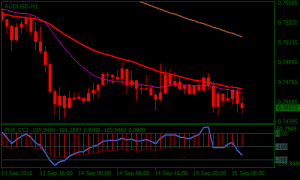
- Exponential Moving Average (EMA): Helps identify trend direction.
- Relative Strength Index (RSI): Measures momentum and overbought/oversold conditions.
- Bollinger Bands: Identifies volatility and potential reversal zones.
- MACD: Provides momentum confirmation.
- Volume Indicators: Help validate breakouts and trend strength.
Read more: Forex Trading Psychology
Risk Management in Forex Scalping
Risk management is arguably more important than strategy selection:
- Use Tight Stop Losses: Scalping relies on controlling losses quickly.
- Limit Risk Per Trade: Many traders risk between 0.5% and 1% of account equity per trade.
- Avoid Overtrading: More trades do not necessarily mean more profits.
- Maintain a Positive Risk-to-Reward Ratio: Even scalpers should seek favorable reward-to-risk opportunities.
- Track Trading Performance: Maintaining a detailed trading journal helps identify strengths and weaknesses.
Common Scalping Mistakes
Many beginners fail because of avoidable mistakes:
- Trading During Low Liquidity
- Ignoring Trading Costs
- Using Excessive Leverage
- Chasing the Market
- Lack of Discipline
Read More: EUR/USD Forecast 2026
Advantages and Disadvantages of Forex Scalping
| No. | Advantages | Disadvantages |
| 1 | Frequent trading opportunities | Requires intense concentration |
| 2 | No overnight exposure | Higher transaction costs |
| 3 | Fast profit realization | Emotionally demanding |
| 4 | Suitable for active traders | Fast decision-making required |
| 5 | Works in multiple market conditions | Not suitable for every personality type |
Choosing a Broker for Scalping
A broker suitable for scalping should offer Low spreads, Fast execution, Minimal slippage, Reliable trading platform, Scalping-friendly trading conditions and Stable market connectivity. The best forex brokers with these features are Errante, Orbex and HYCM. You can sign up in these brokers with the links below:
Sign Up with Errante Sign Up with Orbex Sign Up with HYCM
Read More: Best Forex Indicators in 2026
Final Thoughts; What is Forex Scalping Strategy?
Forex scalping is a fast-paced trading approach designed to capture small market movements through frequent trades. While it offers numerous opportunities and eliminates overnight risk, it also requires discipline, rapid decision-making, and excellent risk management.
For traders who enjoy active market participation and can maintain strict trading discipline, a well-tested forex scalping strategy can become an effective component of a comprehensive trading plan. The key to long-term success lies not in finding a “perfect” strategy but in consistently applying sound risk management and maintaining emotional control during every trading session.
Source: Investopedia