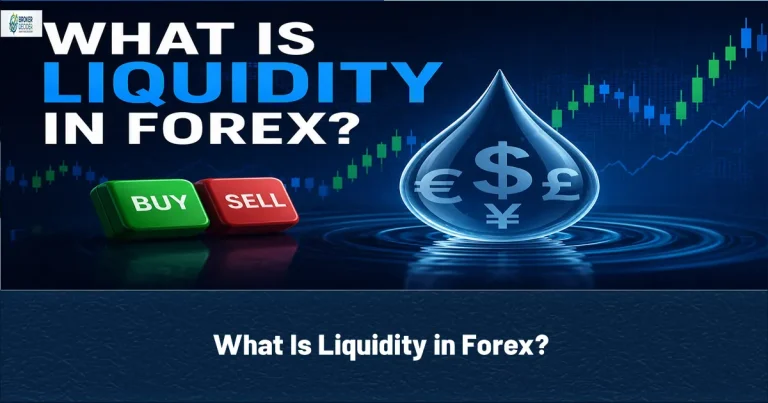
Liquidity in Forex is about how easily a currency pair can be bought or sold without causing a significant change in its market price. In simple terms, a highly liquid market has many buyers and sellers actively trading at the same time, allowing orders to be executed quickly and at prices close to the quoted market value. Understanding what liquidity in Forex means is essential because it directly affects spreads, slippage, execution speed, and overall trading costs.
Read More: What is Swing Trading Strategy?
How Liquidity Works in the Forex?
Every trade requires two participants: a buyer and a seller. Liquidity exists when enough market participants are willing to buy and sell a currency pair at different price levels. For example, if thousands of traders want to trade EUR/USD simultaneously, orders are matched almost instantly. However, if only a few traders are active in a particular currency pair, finding someone to take the opposite side of your trade becomes more difficult, reducing liquidity.
Why Is Liquidity Important in Forex?
Liquidity plays a major role in the quality of trade execution. A liquid market generally offers better trading conditions than an illiquid one. A liquid market advantages are:
- Tighter Spreads
- Faster Order Execution
- Lower Slippage
- Stable Price Movements
Which Currency Pairs Have the Highest Liquidity in Forex?
Major currency pairs have the highest liquidity because they are traded around the world by banks, institutions, and retail traders. Currency pairs with the Highest Liquidity are:
- EUR/USD (Highest Liquidity in Forex)
- GBP/USD
- USD/JPY
- USD/CHF
- AUD/USD
- USD/CAD
What Causes Liquidity to Change?
Liquidity is not constant throughout the day. Several factors influence how much liquidity is available. These factors are:
- Trading Sessions: Liquidity increases when major financial centers are open.
- Economic News: Major economic announcements such as interest rate decisions, inflation reports, or employment data can temporarily reduce liquidity.
- Market Holidays: Liquidity usually declines during holidays.
- Time of Day: Trading activity is generally lower during the Asian session than during the London session.
Read More: Forex vs Crypto Trading
High Liquidity vs Low Liquidity in Forex (Comparison table)
| High Liquidity in Forex | Low Liquidity in Forex |
| Lower slippage | Higher slippage |
| High trading volume | Low trading volume |
| Narrow spreads | Wide spreads |
| Stable pricing | Large price swings |
| Fast execution | Slow execution |
How Can Traders Measure Liquidity?
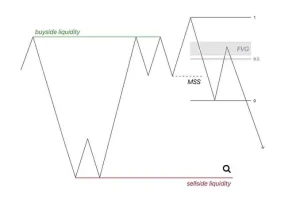
Unlike the stock market, Forex does not have a centralized exchange where total trading volume is reported. However, traders can estimate liquidity using several indicators like:
- Trading Volume: Higher trading volume generally indicates stronger liquidity.
- Spread Size: Narrow spreads usually suggest that liquidity is high.
- Market Depth: Institutional trading platforms often display market depth, showing the number of buy and sell orders available at different prices.
- Price Movement: Smooth price action often reflects healthy liquidity.
Read More: Forex Backtesting Guide
What Happens When Liquidity Is Low?
Low liquidity can create several trading challenges like:
- Orders filled at worse prices
- Spreads become wider
- Price gaps become more common
- Volatility increases
Tips for Trading in a Liquid Market
If you want to benefit from higher liquidity, consider these best practices:
- Just trade major currency pairs.
- Focus on the London and New York session overlap.
- Avoid trading during major holidays.
- Be cautious around high impact economic news.
- Choose a broker with fast execution and deep liquidity providers.
Read More: Forex Fundamental Analysis
Conclusion; Liquidity in Forex
Liquidity in Forex influences almost every aspect of trading, including spreads, execution speed, slippage, and price stability. By choosing highly liquid currency pairs, trading during active market sessions, and understanding how liquidity changes throughout the day, traders can improve both their trading performance and risk management.
Source: Investopedia