
The best time to trade forex is not a single hour or a fixed slot in your diary. It depends on what you trade, how you trade it, and where in the world you sit. Forex runs 24 hours a day, five days a week — but that does not mean all hours are created equal. Some windows are thick with liquidity and full of tradeable moves. Others are thin, slow, and prone to false signals that chew through stops for no good reason. This guide breaks it down clearly: session by session, pair by pair, and strategy by strategy.
Read more: Forex Trading Psychology
How Forex Market Sessions Work
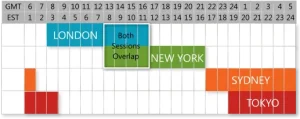
The forex market does not have a central exchange. Instead, it runs across a network of banks, brokers, and institutions spread across global financial centers. Four major sessions overlap across the trading week: Sydney, Tokyo, London, and New York. Each one opens and closes at a specific time GMT, and the character of the market changes meaningfully between them.
The practical consequence: a EUR/USD trade placed at 3:00 AM GMT (deep in the Asian session, when European banks are closed and dollar trading is minimal) is a fundamentally different proposition to the same trade placed at 08:30 AM GMT (when London opens and EUR/USD sees its highest daily volume). Same pair, same setup — different liquidity, different spread, different likelihood of follow-through.
The Four Forex Sessions at a Glance
| Session | Hours (GMT) | Volatility | Best Pairs |
| Sydney | 10:00 PM – 07:00 AM GMT | Low | AUD, NZD pairs |
| Tokyo | 12:00 AM – 09:00 AM GMT | Low–Med | JPY pairs (USD/JPY, EUR/JPY) |
| London | 08:00 AM – 05:00 PM GMT | High | EUR, GBP, USD pairs |
| New York | 01:00 PM – 10:00 PM GMT | High | USD pairs, XAUUSD |
| Overlap | 01:00 PM – 05:00 PM GMT | Peak | All major pairs |
Read More: EUR/USD Forecast 2026
London Session (08:00–17:00 GMT): The Most Important Window
If you can only trade one session, trade London. It accounts for roughly 38–40% of total daily forex volume — more than any other single session — and it is where the majority of institutional order flow, breakouts from Asian range, and directional moves on EUR/USD and GBP/USD originate.
The first two hours of London (08:00–10:00 GMT) are particularly active: overnight Asian ranges tend to break, institutional algorithms fire, and the day’s directional bias often gets established within this window. If you trade price action and you’re looking for the cleanest breakout setups, London open is your primary hunting ground. The spreads are tight, the moves are real, and there is enough volume that your stop loss will not be hunted by thin-market games.
London–New York Overlap (13:00–17:00 GMT): Peak Liquidity
The four-hour window when London and New York are both active is the single most liquid period in the entire forex week. Spreads on major pairs — EUR/USD, GBP/USD, USD/JPY — drop to their tightest levels. Volume peaks. High-impact US data (NFP, CPI, FOMC statements) releases during this window, which means the biggest moves of the week typically happen here. For active traders, day traders, and anyone trading news — this is the session.
Read More: Best Forex Indicators in 2026
New York Session (13:00–22:00 GMT): US Data and Dollar Moves
The New York session opens at 13:00 GMT and initially overlaps with London before European traders begin closing positions around 17:00 GMT. The 13:00–17:00 GMT overlap period is the strongest part of New York trading; after 17:00 GMT, volume thins noticeably as European participants exit. Key US economic releases — Non-Farm Payrolls (first Friday of the month at 13:30 GMT), CPI, Retail Sales, and Fed decisions — all land during the New York session and produce the most significant single-event moves of any trading week.
Tokyo Session (00:00–09:00 GMT): Slow, Steady, JPY-Specific
The Tokyo session is quiet by the standards of London and New York. EUR/USD and GBP/USD tend to drift within a narrow range. The pairs that genuinely move are JPY-based: USD/JPY, EUR/JPY, and AUD/JPY respond to Japanese economic data, Bank of Japan commentary, and risk sentiment flows during Tokyo hours. If you trade JPY pairs specifically, this session is worth your attention. If you don’t, most of what happens in Tokyo is noise you can afford to miss.
Read More: Forex Copy Trading in 2026
Sydney Session (22:00–07:00 GMT): Best Avoided by Most Traders
Sydney is the quietest session of the week. Spreads are wider, volume is low, and the moves that do occur are frequently reversed when London opens. AUD and NZD pairs are the most active, but even those tend to consolidate rather than trend during Sydney hours. For most retail traders trading major pairs, the Sydney session offers poor conditions and is better used for analysis and sleep.
Best Time to Trade Forex by Currency Pair
| Pair | Best Session Start | Peak Liquidity Window | What to Avoid |
| EUR/USD | London open (08:00 GMT) | London–NY overlap | Avoid: Asian session |
| GBP/USD | London open (08:00 GMT) | London session | Avoid: after NY close |
| USD/JPY | Tokyo (00:00–09:00 GMT) | NY open overlaps with Tokyo | Avoid: mid-London |
| XAU/USD | London open + NY open | London–NY overlap | Avoid: Asian session |
| AUD/USD | Sydney–Tokyo overlap (23:00 GMT) | London open | Avoid: NY close |
When NOT to Trade: The Hours That Cost More than They Return
Knowing the best time to trade forex is only half the picture. The other half is knowing which windows to avoid — because trading in the wrong conditions does not just reduce your win rate, it actively increases your losses through wider spreads, false breakouts, and erratic price behavior. AVOID TRADING DURING THESE WINDOWS:
- Friday after 20:00 GMT: liquidity drains sharply as the week closes; spreads widen; moves reverse.
- Sunday open (21:00–22:00 GMT): weekend gaps and thin early liquidity create false signals.
- Asian session on EUR/USD or GBP/USD: too little volume to sustain directional moves on European pairs.
- 30 minutes before/after high-impact news: spreads widen dramatically; slippage increases; stops can be hunted.
- Market holidays (US Thanksgiving, Christmas week, Easter): volume drops 40–60%; all rules break down.
Read More: Forex Risk Management; The Complete Framework for Protecting Your Trading Capital
Matching Session Times to Your Trading Strategy
The best time to trade forex is also a function of your strategy — not just the session clock.
- Scalpers and day traders need London or the London–New York overlap. The volume, tight spreads, and directional moves make short-term trading viable. Outside these windows, scalping major pairs produces too many false signals.
- Swing traders are the least time-sensitive. A daily-chart swing trader can set orders and alerts during London and let the trade run without monitoring specific intraday sessions. The entry is the only moment that requires active attention.
- News traders need to be at their screens during the NY session open (13:30 GMT) when the most important US data releases occur. Pre-planning entries, stops, and targets before the release is essential — you will not have time to think during the spike.
- Part-time traders in Europe or the Middle East are naturally positioned for the London session — the best session by almost every metric. This is an advantage worth using deliberately.
- Part-time traders in Asia or Australia can access the Tokyo–London transition (07:00–09:00 GMT), when Tokyo closes and London opens — a period that often produces clean breakout setups as European volume arrives into a ranging Asian market.
Final Thoughts: Best Time to Trade Forex
The best time to trade forex for the majority of traders — regardless of strategy — is the London session and the London–New York overlap. The data on volume, pip range, and liquidity all point to the same conclusion: these four to eight hours contain the most opportunity, the tightest spreads, and the most reliable follow-through on technical setups.
That said, the best session is only relevant if you can actually be at your charts during it. A swing trader who checks the daily chart once a day operates differently from a scalper watching M5 for four hours. Know your strategy, know your schedule, and match your trading hours to both. Trading the right pair in the right session, consistently and with discipline, is worth more than any indicator or strategy upgrade.
Source: Investopedia